Solving the Mystery of Portuguese Payments Systems
@dalexeenko|May 18, 2025 (11m ago)0 views
"How hard can payments be?"
This was the question a colleague of mine asked as we grabbed coffee last week. You enter your credit card, hit "Purchase", and the money is either there or it's not. Right?
I smiled remembering the past decade building payments systems at Airbnb and Stripe where I'd seen firsthand how complex the seemingly simple act of buying a pastel de nata or booking an Airbnb could be. Behind every purchase lies a hidden world.
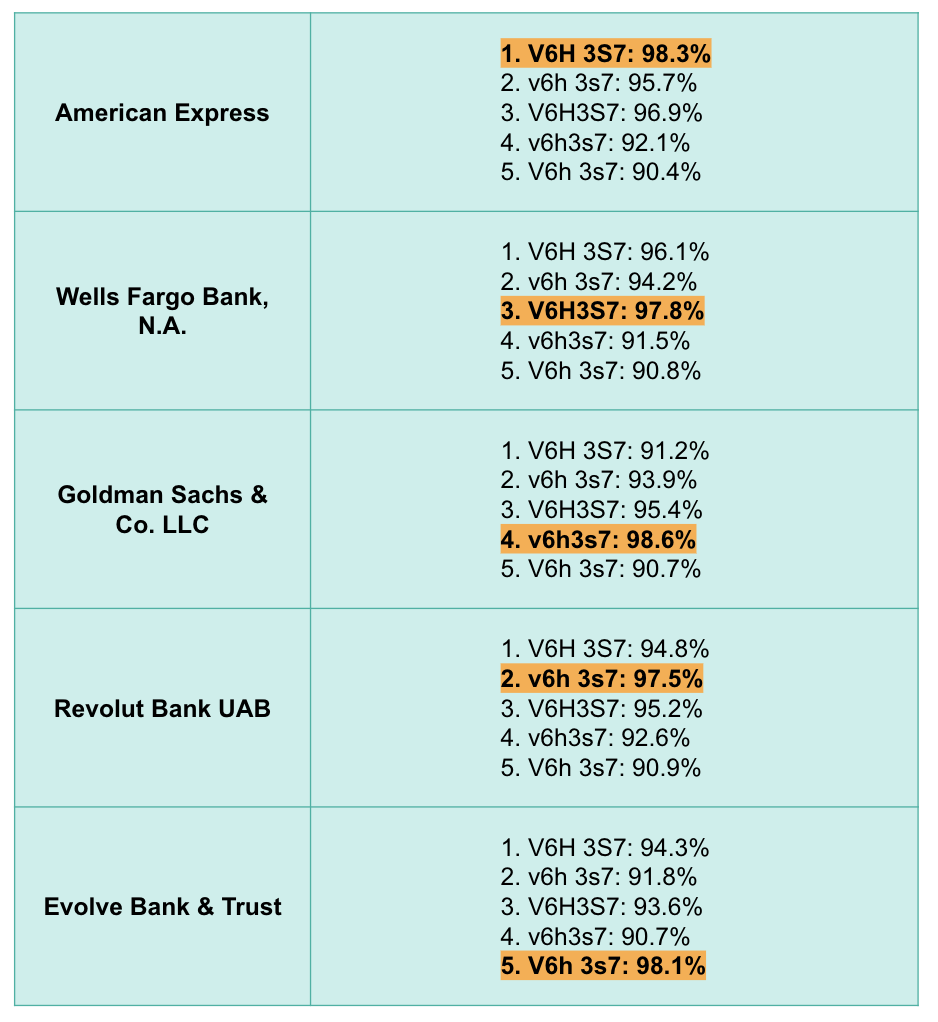
Banks handshake with payment networks. Layers of sophisticated risk defenses scan for fraud. Algorithms decide which payment rails to use. Even tiny details matter — like whether you format a Canadian postal code as "V6H3S7" or "V6H 3S7". Get it wrong? Your transaction fails.
Here's what that world looks like under the hood. Payment messages follow an international standard for financial transaction interchange messaging, called ISO 8583. Think of it as TCP/IP for money:
MTI: 0100 (Authorization Request)
002 Primary Account Number: 4242424242424242
003 Processing Code: 0
004 Amount of Transaction: 1000
007 Transmission Date/Time: 0518123456
010 Conversion Rate, Cardholder Billing: 61000000
014 Card Expiration Date: 2512
018 Merchant Category Code: 5734
019 Acquiring Institution Country Code: 840
022 POS Entry Mode+ Pin Capability: 010
025 Point of Service (POS) Condition Code: 59
037 Retrieval Reference Number: 1234567890
041 Terminal ID: 1234567890
042 Card Acceptor ID: 4242424242424242
043 Alternative Merchant Name/Location : {
043 "card_acceptor_name": "DMITRYS DONUTS",
043 "zip": "V6H3S7",
043 "country_code": "CAD"
043 }
049 Transaction Currency Code: 840
051 Currency Code, Cardholder Billing: 840
060 Additional POS Information
See that zip code? Format it wrong and your transaction gets declined. Each bank has different rules. As a merchant, you control your payment success rate through these details. A few payment attributes like the card type, card country, Merchant Category Code are outside of your control. But several others like the authentication method, transaction size, data submitted in the transaction, data formatting, fraud rates are all in your control.
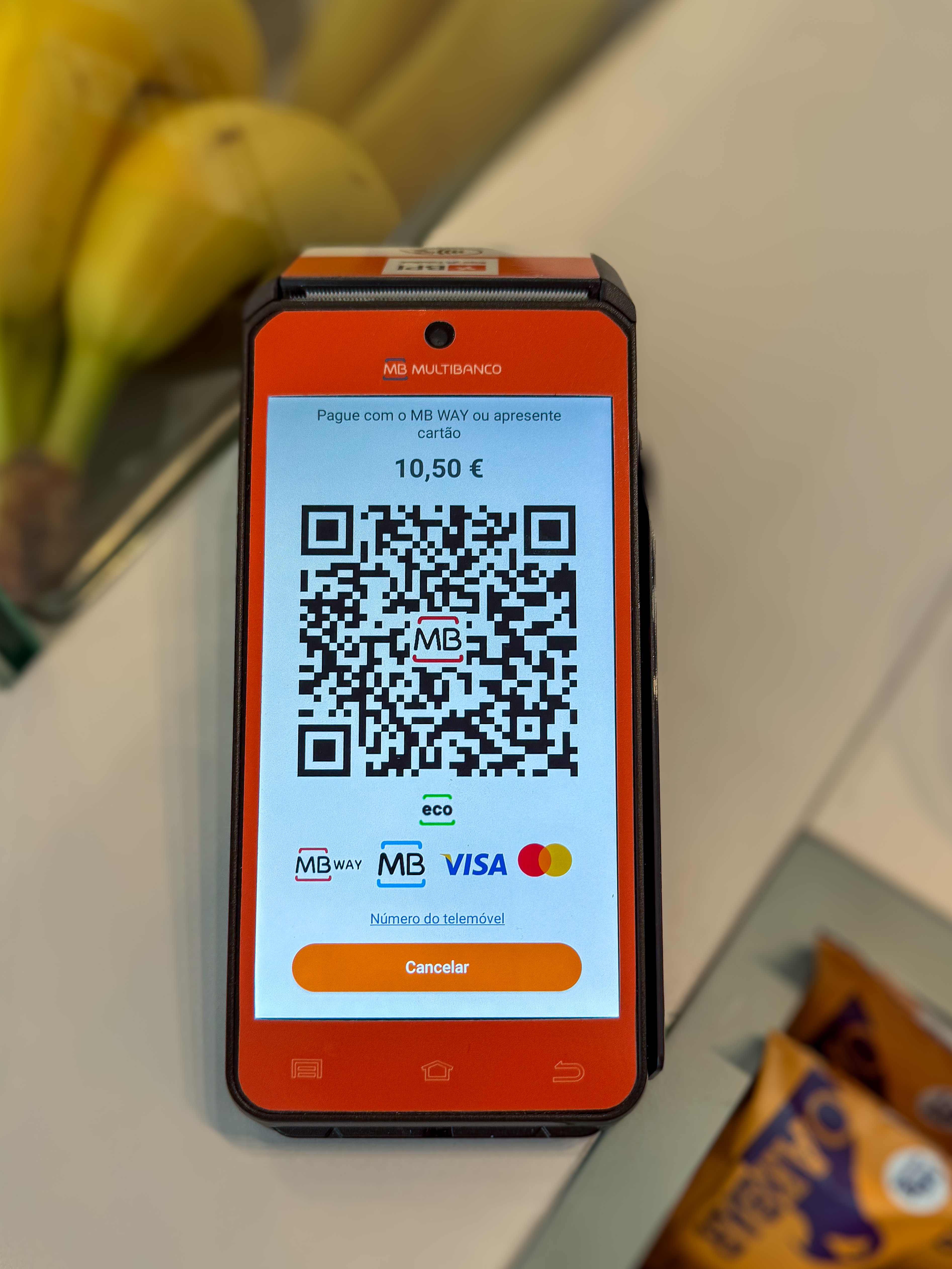
But when I moved to Portugal, I found something more intriguing. Multibanco. MB WAY. Open Banking. What are these systems? Why are they everywhere here but nowhere in the US? First, let's understand how payments actually work.
#The World of Online Payments
Is the money there or not? It's not that simple. Hundreds of payment methods exist worldwide. In the US payments methods are fairly standard and somewhat boring: cash, checks, cards, ACH and wire transfers. Fun fact: 90% of dollars move through wires, but wires are only 1% of transactions by count. We could talk about push vs. pull payments, open-loop vs. closed-loop systems, net vs. gross settlement, card present vs. card-not-present transactions, but there is a lot there and we'll save it for another time. Once you travel outside of the US, the world of online payments gets more exciting: you see Konbini in Japan, Boleto and Pix in Brazil, Paytm in India, iDEAL in Netherlands, Alipay in China. You see vouchers and coupons, QR codes, voice confirmation, facial recognition payments and much more. There are numerous ways to slice and dice all of these payments mechanisms. One way to look at it is through the following four primary categories:
- Credit and debit cards. These remain a popular choice for a lot of people, both consumers and businesses. Credit cards allow you to purchase products or services on credit, while debit cards immediately withdraw funds from your bank account.
- Bank debits and bank transfers. These methods allow customers to transfer money straight from their account without intermediaries. Examples here include ACH Direct Debit or SEPA Direct Debit.
- Digital wallets. These enable customers to pay using stored card information or an account balance. Some of the most famous examples include Apple Pay, Cash App Pay, Google Pay and PayPal.
- Vouchers and coupons. These allow customers to receive a digital token at checkout which they can then use to complete payment at a local store (as needed). Popular implementations include Portugal's Multibanco and Brazil's Boleto systems.
All of these work completely differently.
#Behind the Scenes of Card Payments
As a customer, also called as a cardholder, you punch in your card information at the merchant's website, the merchant then works with a payment processor to securely encrypt and send that data to the acquiring bank to process the transaction. The acquiring bank then routes the transaction via a card network (e.g., Visa, Mastercard, Discover, or American Express) to the issuing bank. The merchant typically needs to establish an acquirer relationship and a merchant bank account. The issuing bank verifies the transaction details — such as the cardholder's name, the card's expiration date, and CVV, — checks the availability of funds and either approves or denies the transaction. If the transaction is approved, then the issuing bank extends credit to the cardholder and moves the funds into the merchant's account at the acquiring bank. At the end you see a message providing the status of the payment (e.g., "Success! Your pastel de nata from Manteigaria is on its way").
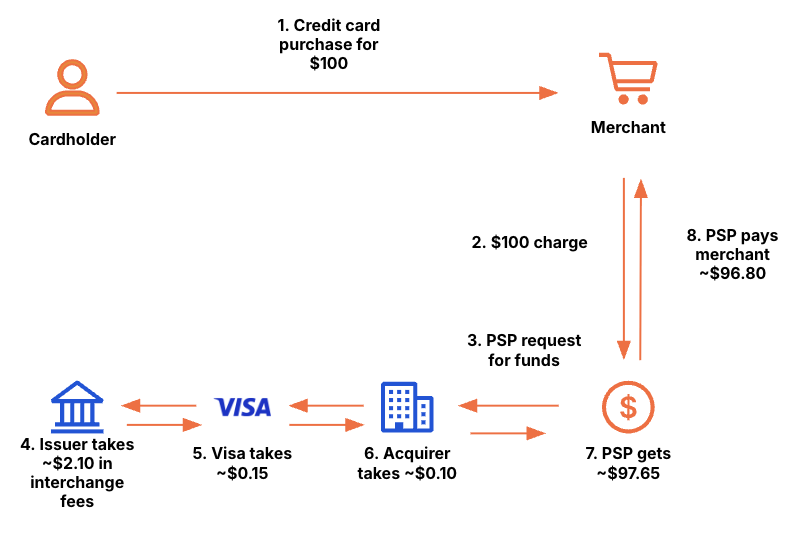
The reality of course is slightly more complicated. Once the issuing bank decides to approve the transaction, it doesn't immediately move the funds to the acquiring bank. Instead, it updates the cardholder's balance and waits for the capture request (you might have heard about the two steps of a credit card transaction: authorization and capture). The card network then calculates interchange fees that are paid between banks for processing credit card transactions. Only after that the issuing bank moves the funds to the card network, which in turn moves these funds to the acquiring bank. At the end the merchant receives the transaction amount with the issuing bank's interchange fees, acquiring bank fees, card network fees, and payment processor's fees subtracted from it. That marks the transaction as settled. The merchant's system then reconciles its account by cross-referencing the transaction recorded internally with the amount that has been settled.
There is an additional layer of complexity, if as a merchant your products are subscriptions and usage-based and you charge customers on a recurring basis. Hence, the merchant needs to build the logic to collect payments on a given cadence, enable different pricing and packaging models, process and retry failed payments, allow customers to upgrade and downgrade plans, and more, which is a whole separate topic.
As you can also see here, the popular myth that card networks (Visa, Mastercard) and payment processors (Stripe, Adyen, Worldpay) take the lion share of the interchange fee (they charge the extra 3%!), is simply wrong.
- 70% of the fee goes to the issuer, and for a good reason. The issuer takes on and manages the risk involces in extending credit, they are on the hook for AML and KYC compliance, etc.
- The acquirer takes a smaller piece for enabling the merchant to accept card payments. It covers things like fraud prevention and payment settlement.
- What about Visa and Mastercard? Their role is to provide the global payment network. They facilitate the communication between the acquirer and issuer, earning a small network fee for effectively maintaining scalable and global payment rails.
#ACH: America's Workhorse
ACH stands for Automated Clearing House. It's a US electronic funds transfer system overseen and governed by NACHA (National Automated Clearinghouse Association). It enables quick settlement for both credit ("push") and debit ("pull") transactions between banks and financial institutions.
After the customer provides their bank account information, the merchant works with the payment processing platform and acquirer to have the customer's bank, also known as Originating Depository Financial Institution (ODFI), send a request to the merchant's bank, also known as Receiving Depository Financial Institution (RDFI), to transfer funds. The financial institutions then check that there are sufficient funds in the account and proceed with the funds transfer. Typically, once the customer provides their bank account information, they are presented with a micro-deposit verification. Two sub-dollar amounts are transferred to their bank account and then reversed. The customer then needs to enter the micro-deposit amounts at the merchant's website, to confirm the ownership of the account (otherwise anyone could enter anyone else’s bank account information, after all every checkbook has a routing and account numbers).
ACH transfers are much cheaper: they are typically around 0.8% of the transaction amount, and usually capped at around $5 per transaction.
#How Europe Does It: SEPA
As soon as we landed in Portugal, everybody started asking us for IBAN payments. In fact even before we left my favorite Humberto Delgado Airport, we had to send an IBAN payment to pay for our dog's documentation.
Single Euro Payments Area (SEPA) was built to streamline electronic payments across Europe, making cross-border transactions just as easy, fast, and affordable as domestic ones. Whether I need to send rent to my landlady in Lisbon, pay a vendor in Malaga, or split a dinner bill with friends in Madrid, SEPA makes moving the money quite easy and smooth.
At the heart of SEPA payments is the International Bank Account Number (IBAN), a standardized bank account identifier used across all SEPA countries. An IBAN includes a country code, check digits, a bank identifier, and your specific account number, ensuring funds always reach the right destination. Alongside IBAN, a Bank Identifier Code (BIC), otherwise known as SWIFT, identifies the exact bank involved in the transaction. At this point in reality only the IBAN matters.
SEPA transfers typically process within 1-2 business days, significantly faster than traditional international wire transfers. The real deal is Instant SEPA payments available in many banks that make funds available to the recipient within seconds, 24/7. This is one of the examples where European regulation and standardization has massivelly transformed European banking and made it better for everyone. Unforunately the end user experience is still controlled by the issuing bank, so while the payments rails are fantastic, they end-experience may still suffer: e.g., it's still much easier for me to send a Venmo than an ActivoBank SEPA transfer.
#The Portuguese Payment Revolution
Multibanco is a Portuguese interbank network that links the ATMs of >30 banks in Portugal. But it isn't just an ATM network, it's deeply woven into the fabric of Portuguese e-commerce, bill and utility payments, ticket purchases and other aspects of everyone's tinancial life. For online payments, Multibanco uses a unique voucher-based system. At checkout you will typically see:
- An entity number (essentially, the merchant ID)
- A transaction-specific reference number
- The exact payment amount
You then complete the transaction through online banking or any ATM. Why did Portugal embrace this while the US stuck with cards? While credit card interchange fee is capped, it's still substantial. Most Portuguese carry debit cards, not credit cards, missing out on rewards and consumer protections that drive American card usage. Cards simply never achieved critical mass.
MB WAY brought Multibanco into the smartphone era. It enables instant peer-to-peer transfers, mobile payments via NFC and QR codes, even cardless ATM withdrawals. Walk up to any Multibanco ATM, enter a code from your phone, and withdraw cash, no card needed.
But here's where it gets interesting. MB WAY is no longer staying within Portugal borders. It's already connected with Spain's Bizum and Italy's Bancomat Pay. Portuguese users can now send money instantly to Spanish and Italian phone numbers without IBANs.
The ambition goes further. MB WAY is preparing to connect with Vipps MobilePay in Norway, Denmark, Finland, and Sweden and Poland's Blik. If successful, this network would span 10+ countries with over 70 million users. This then might become Europe's answer to Venmo.
Unlike SEPA transfers that require IBANs and can take a business day, these mobile wallets work instantly using just phone numbers. Imagine sending euros from a cafe in Lisbon to a friend in Oslo as easily as sending a text message.
I think that this isn't just about technology. It's about Europe building its own payment sovereignty. Europe is quietly connecting its homegrown systems, each one reflecting local culture and habits, yet interoperable across borders. There is something deeper there. Payment methods aren't just infrastructure — they're cultural artifacts reflecting how societies build trust, share resources, and adapt technology to local needs. In Portugal's case, they've created something that works better for Portuguese consumers than anything Silicon Valley has offered so far.
Thanks to Dasha Cherepennikova, Jason Katz-Brown, and Sam Rhea for reading drafts of this.